Driveway Leveling for Uneven, Sunken and Settled Concrete
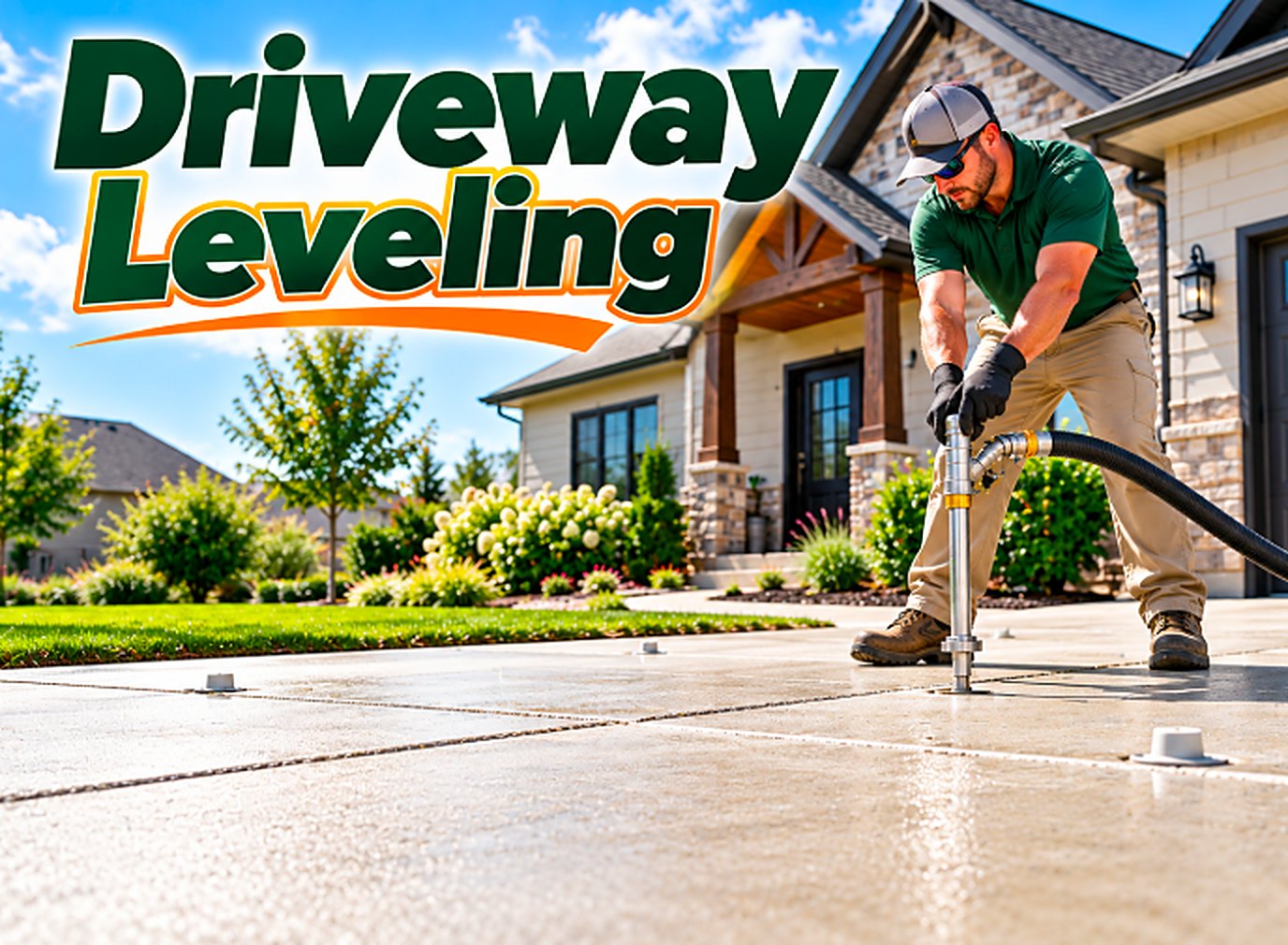
A driveway should provide a smooth, dependable surface from the street to your garage. When sections of concrete begin to sink, tilt, or separate, the driveway can become difficult to use and may create noticeable trip points, drainage problems, and an uneven appearance. Driveway leveling is designed to correct these problems by raising settled concrete slabs and improving the position of the existing surface whenever the concrete is still structurally suitable for repair.
Concrete driveways often settle gradually. The change may be so slow that homeowners do not notice it until one slab sits significantly lower than the next. Settlement can occur near the garage entrance, along the sidewalk crossing, beside landscaped areas, or anywhere the soil beneath the driveway loses support.
Instead of immediately demolishing and replacing the entire driveway, concrete leveling may allow usable slabs to remain in place while the low areas are carefully brought closer to their intended elevation.
Why Driveway Concrete Sinks
Concrete itself is heavy, and it depends on properly compacted material underneath for support. When the base changes, the slab above can move.
Common causes of driveway settlement include:
- Poorly compacted soil beneath the original driveway
- Soil erosion caused by runoff
- Water washing material from beneath the slab
- Downspouts discharging beside the driveway
- Repeated wet and dry soil cycles
- Old utility trenches that continue settling
- Voids beneath concrete
- Soil movement near retaining walls
- Tree roots affecting nearby soil
- Heavy vehicle traffic
The visible low slab is often only the symptom. A proper driveway leveling project starts by evaluating where settlement has occurred and how the neighboring slabs are positioned.
Leveling Individual Driveway Slabs
Many driveways are divided into several concrete sections. One section may settle while the surrounding slabs remain relatively stable.
In these situations, lifting the affected slab can help reduce the height difference between adjoining sections. The goal is not simply to make one corner higher. The slab must be adjusted in relation to the garage floor, sidewalk, curb, drainage direction, and neighboring concrete.
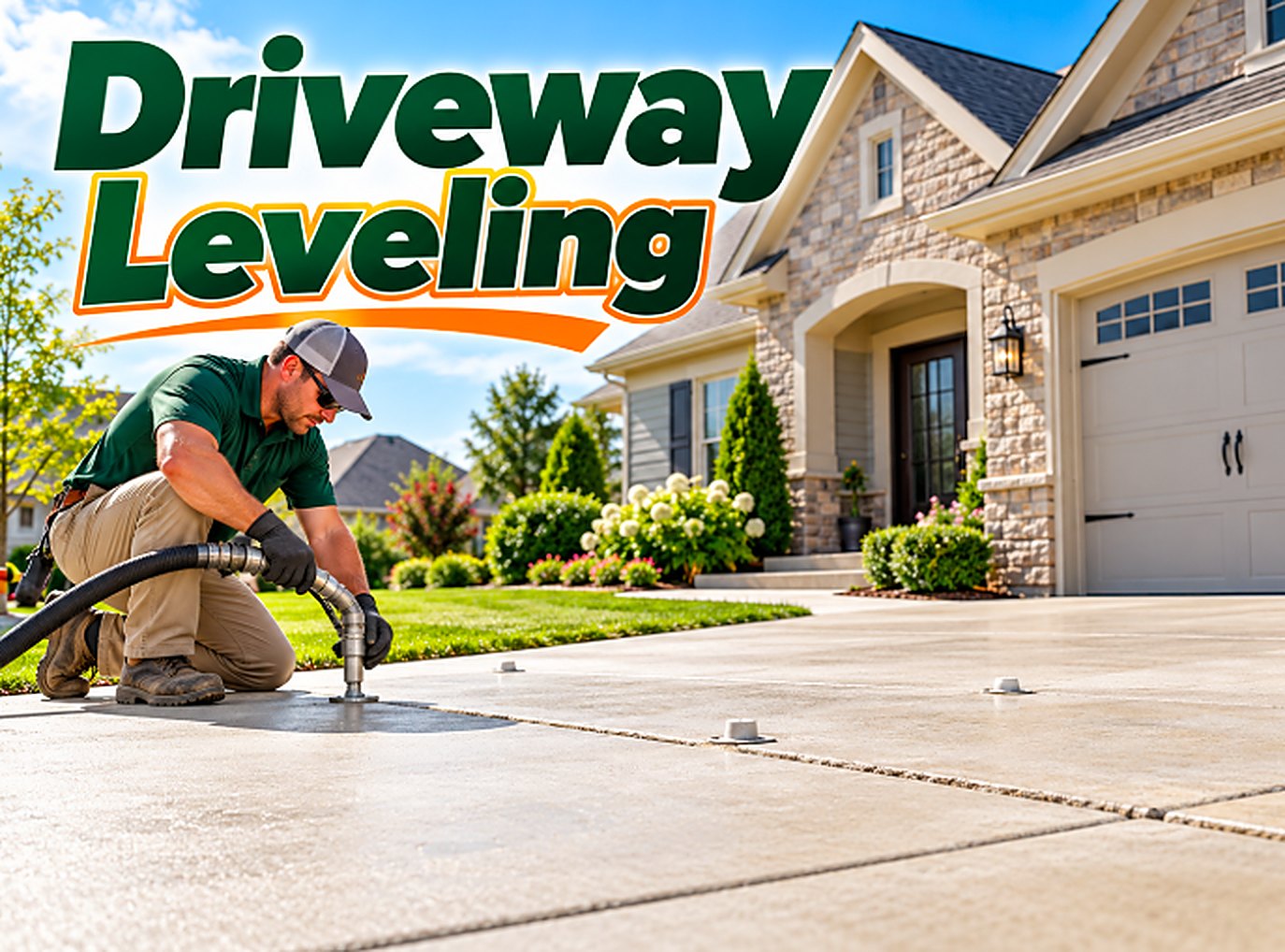
Technicians may perform the lift gradually to avoid unnecessary stress on the slab.
Driveway Leveling Near the Garage
One of the most common driveway problems appears directly in front of the garage.
When the driveway settles below the garage slab, vehicles may experience a noticeable bump when entering or leaving the garage. Water may also collect near the garage opening.
Leveling this section requires careful attention because the driveway must transition properly toward the garage without directing water into the structure.
Improving Drainage With Driveway Leveling
Uneven concrete can change the direction in which rainwater moves.
A sunken section may create a depression where water repeatedly collects. Standing water can stain the surface, carry dirt into joints, and contribute to further soil movement beneath surrounding concrete.
When conditions allow, driveway leveling can improve the surface slope and help water move toward an appropriate drainage area.
Leveling, however, should be combined with correcting the source of excessive water whenever possible. Gutters, downspouts, irrigation, grading, or leaking lines may need attention to help reduce future settlement.
Driveway Trip Hazard Correction
Raised edges between adjoining slabs can create an uncomfortable walking surface. Although one slab may appear high, the real issue is often that the neighboring slab has dropped.
Leveling the lower concrete can reduce the difference in elevation without grinding away a large portion of the slab.
This is particularly useful near:
- Walkways crossing the driveway
- Garage entrances
- Side doors
- Gates
- Mailbox approaches
- Parking areas
When Driveway Leveling Is a Good Option
Concrete leveling may be appropriate when the driveway remains substantially intact but has lost support underneath.
Good candidates often include slabs with:
- Moderate settlement
- Uneven joints
- Low corners
- Minor surface cracking
- Drainage depressions
- Voids beneath the concrete
Concrete with severe structural deterioration, extensive fragmentation, major heaving, or badly damaged reinforcement may require replacement instead.
Driveway Leveling Versus Replacement
Replacement removes the existing slab and installs new concrete. That can be the right solution when the concrete itself has reached the end of its usable life.
Leveling focuses on preserving existing concrete that remains serviceable.
Because demolition is often avoided, leveling can reduce disruption to the property and may allow the driveway to return to normal use sooner than a complete reconstruction project.
A More Even Driveway Without Unnecessary Demolition
A settled driveway does not always need to be torn out.
Our driveway leveling service focuses on identifying the sections that have moved, determining whether the existing concrete can be saved, and developing a lift plan based on the surrounding elevations.
The result is a more functional driveway with smoother transitions, reduced trip hazards, and a cleaner overall appearance.