Foundation Leveling in Pomona, CA
A careful, inspection-first approach to foundation settlement for homes and buildings in Pomona.
- Serving Pomona since 2012
- Bonded and insured
- Free on-site estimates
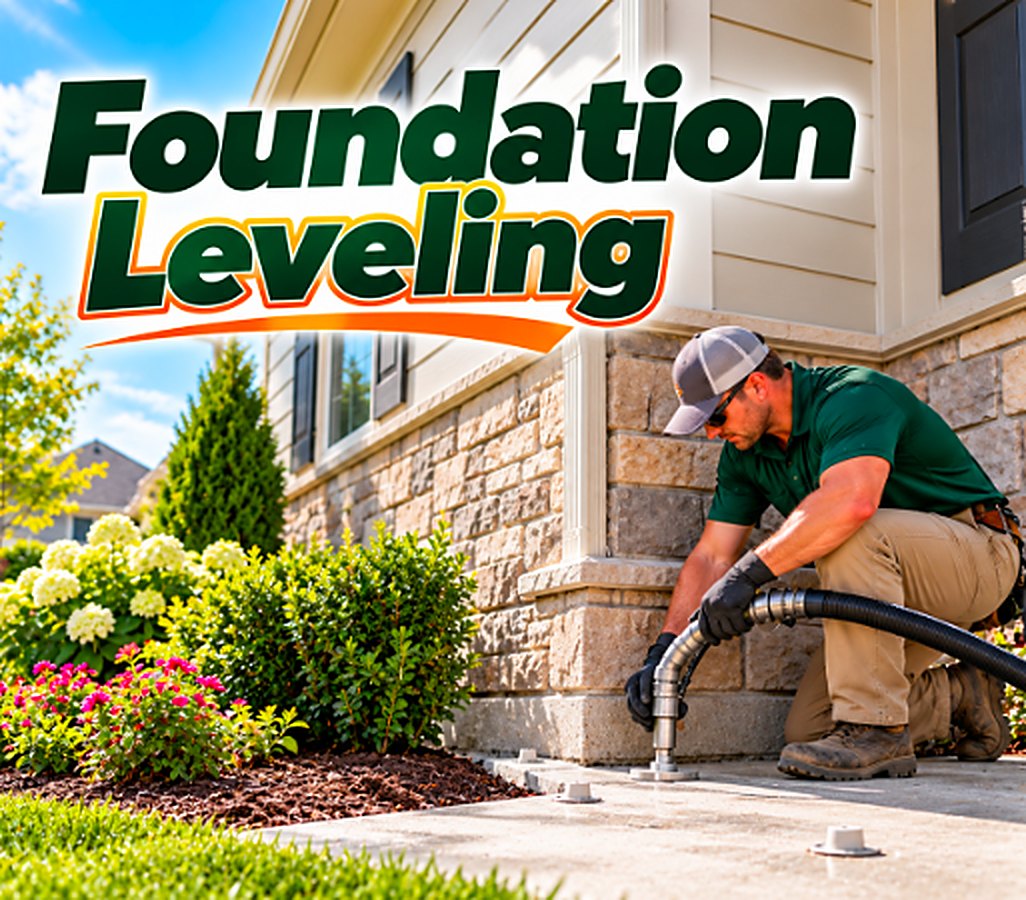
Foundation Leveling and Structural Settlement Evaluation
Foundation movement is significantly different from ordinary driveway or sidewalk settlement. A foundation supports the structure itself, which means changes in elevation may affect walls, floors, doors, windows, framing, utilities, and other building components.
For this reason, foundation leveling should begin with a careful evaluation of the type of foundation, the pattern of movement, and the underlying cause.
The objective is not simply to make a surface appear flat. The goal is to understand how the structure has moved and determine an appropriate stabilization or correction strategy.
Signs That May Indicate Foundation Movement
Possible symptoms include:
These signs do not automatically prove a major foundation problem. Buildings naturally experience some movement, and many cracks are unrelated to structural failure.
Evaluation helps distinguish ordinary conditions from meaningful settlement.
- Sloping interior floors
- Doors that begin sticking
- Windows that become difficult to operate
- Cracks near doors or windows
- Separation between walls and ceilings
- Exterior masonry cracking
- Gaps near trim
- Uneven floor elevations
- Visible movement along the foundation
- Changes that continue becoming more noticeable
Why Foundations Settle
Foundation performance is strongly connected to soil behavior.
Settlement may be influenced by:
The same structure can experience different soil conditions from one side to another, resulting in uneven movement.
- Poorly compacted fill
- Expansive soil
- Soil drying and shrinking
- Excessive moisture
- Drainage problems
- Plumbing leaks
- Erosion
- Changes in groundwater
- Nearby excavation
- Tree-related moisture changes
- Inadequate original support
Foundation Leveling Is Not the Same as Concrete Slab Leveling
A sidewalk slab can often be treated as an independent piece of concrete.
A foundation cannot.
Structural loads must be considered before attempting elevation corrections.
Depending on the building and foundation system, solutions may involve specialized supports, underpinning, piers, stabilization methods, or other engineering-based repairs.
Slab Foundation Settlement
Homes and commercial buildings built on concrete slabs may experience localized or broader settlement.
Interior floor changes can sometimes be connected to soil movement underneath the slab.
Evaluation may include:
This information helps determine whether movement is active and what type of repair may be appropriate.
- Floor elevation measurements
- Crack patterns
- Exterior conditions
- Drainage
- Plumbing history
- Soil conditions
- Structural loads
Crawlspace and Raised Foundations
Raised structures can develop uneven floors for reasons unrelated to soil settlement directly beneath a slab.
Possible causes include:
Correcting these conditions requires a different approach from lifting an exterior concrete slab.
- Pier movement
- Beam deflection
- Damaged supports
- Moisture
- Wood deterioration
- Footing settlement
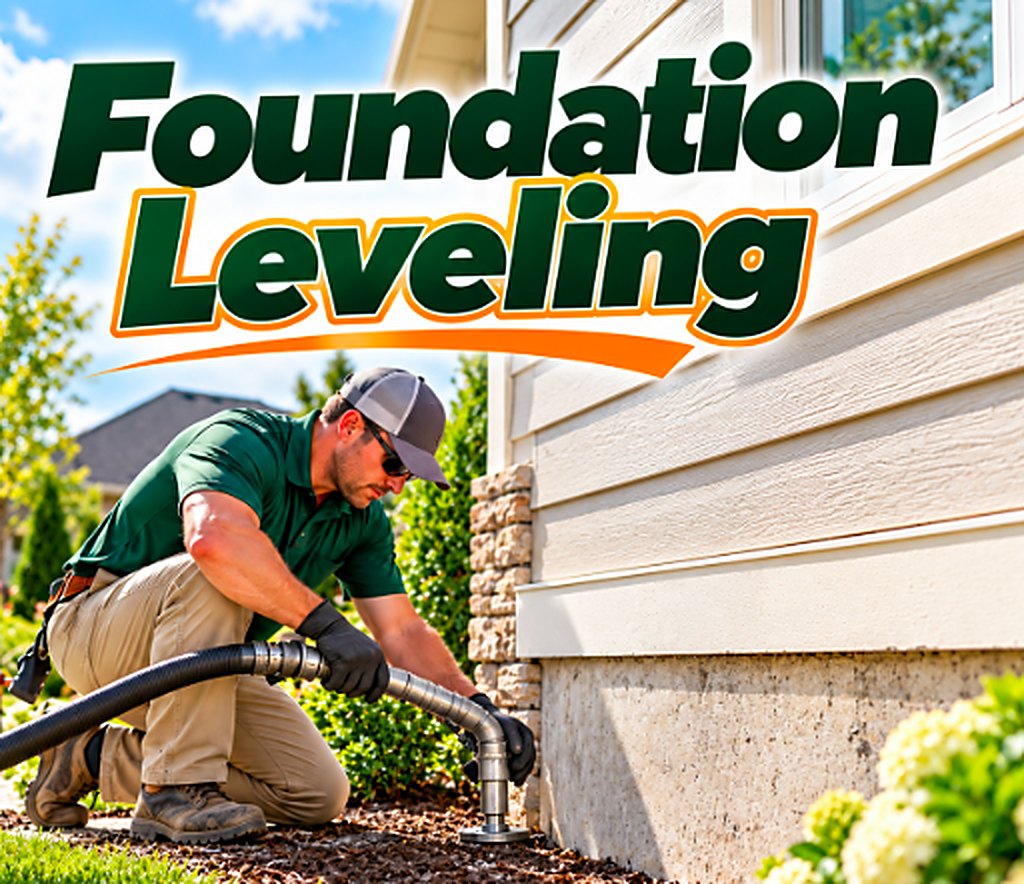
Drainage and Foundation Movement
Water management plays a major role around foundations.
Roof runoff that collects beside a structure can alter soil conditions. Plumbing leaks may also create concentrated moisture beneath or around the foundation.
Conversely, extremely dry soil can shrink and reduce support.
For long-term performance, the cause of movement should be considered along with the physical leveling work.
How Much Can a Foundation Be Leveled?
The appropriate amount of correction depends on many factors.
Trying to force an older structure back to a mathematically perfect elevation can sometimes create additional damage.
Foundation correction is generally planned around structural stability and reasonable improvement rather than chasing absolute perfection.
Professional Evaluation Matters
Foundation leveling requires a higher level of assessment than routine flatwork repair.
Depending on the severity and local requirements, structural engineering input may be recommended before repair.
Our approach is to identify observable movement, evaluate site conditions, and determine the appropriate next step rather than treating every crack as the same type of problem.
Stabilize the Structure With the Right Plan
Foundation concerns should be approached systematically.
The first step is understanding what moved, where it moved, and why.
From there, an appropriate leveling or stabilization strategy can be developed based on the actual structure and site conditions.
Our Foundation Leveling Process
Every project follows the same careful steps, from the first inspection to the final cleanup.
- 1
Structural evaluation
We look at floors, doors, windows, crack patterns and exterior conditions.
- 2
Measure and document
Floor elevations and visible movement are measured and recorded.
- 3
Identify the cause
We review drainage, plumbing history and soil conditions around the structure.
- 4
Recommend the right next step
We explain whether leveling, stabilization, or an engineer's review is the right path.
- 5
Planned correction
Approved work is carried out gradually, aiming for stability and reasonable improvement.
- 6
Review results
We review the results with you and point out any drainage changes that help long-term performance.
Foundation Leveling Cost in Pomona
Leveling usually costs far less than tearing out and replacing concrete. Here is what a typical foundation project costs and what changes the price.
Type of foundation
Slab, raised and crawlspace foundations each need different repair methods.
Extent of movement
Localized settlement costs far less to address than movement across the structure.
Repair method
Slab injection, supports, piers or underpinning vary widely in cost.
Engineering input
Some projects need a structural engineer's evaluation before work begins.
Drainage and plumbing
Water sources that caused the movement may need to be corrected.
Prices are estimates only and are not a quote. Your exact price is confirmed in writing after a free on-site inspection.
Foundation Leveling FAQs
Common signs include sloping floors, sticking doors, windows that are hard to open, cracks near door and window corners, gaps at trim, and exterior masonry cracks. Some movement and cracking is normal in buildings, so an evaluation helps separate ordinary conditions from real settlement.
No. A sidewalk or patio slab is an independent piece of concrete, but a foundation supports the building. Structural loads must be considered, and the solution may involve supports, piers, underpinning or other engineering-based repairs rather than simple slab lifting.
Not always, and forcing it can cause new damage. Older structures have often settled over many years. Foundation correction is planned around stability and reasonable improvement rather than reaching a perfectly flat measurement.
It depends on the severity of the movement and local requirements. For some projects, structural engineering input is recommended before any repair. We tell you during the evaluation if we believe an engineer should review your home.
Soil behavior is the main factor. Poorly compacted fill, expansive soil that swells and shrinks, plumbing leaks, poor drainage, erosion, nearby excavation and tree-related moisture changes can all reduce support under a foundation.




Ready to fix your foundation?
Get a free, no-obligation estimate from a local Pomona team.