Patio Leveling in Pomona, CA
Level settled patio slabs, stop water running toward your house, and make your outdoor space usable again.
- Serving Pomona since 2012
- Bonded and insured
- Free on-site estimates
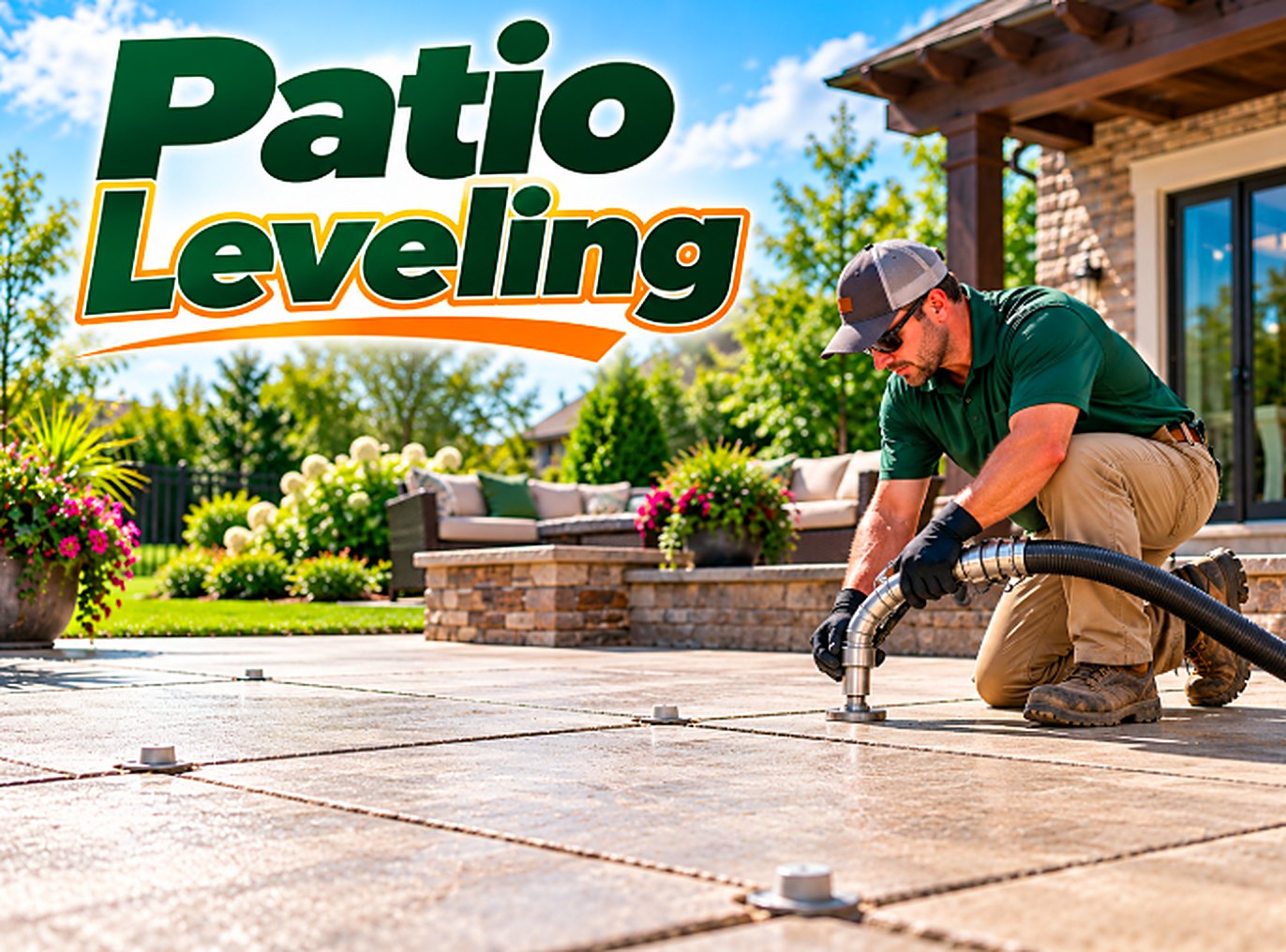
Patio Leveling for Settled and Uneven Outdoor Concrete
A concrete patio is meant to be a comfortable extension of the home. It may support outdoor furniture, grills, planters, dining areas, shade structures, and gathering spaces. When sections of the patio settle, the surface can begin to slope incorrectly, hold water, or develop uneven joints.
Patio leveling is a method of repositioning settled concrete slabs while keeping suitable existing concrete in place.
Instead of starting with demolition, we evaluate whether the patio can be lifted and stabilized.
Signs Your Patio May Need Leveling
Patio settlement may appear in several ways:
- One slab sits lower than the surrounding concrete
- Water collects after rain
- Patio furniture feels unstable
- Concrete slopes toward the house
- Gaps develop along walls
- Joints no longer align
- Doors have an awkward step outside
- Sections feel hollow underneath
- Cracks develop near settled corners
Some problems remain mostly cosmetic at first. Others can directly affect drainage and everyday use.
Why Patios Settle
Patios are often built beside homes where the soil has previously been disturbed during construction.
Backfilled soil close to the foundation may continue compressing for years if it was not thoroughly compacted.
Settlement can also result from:
- Downspout discharge
- Roof runoff
- Landscape irrigation
- Poor grading
- Soil erosion
- Old trenches
- Repeated soil expansion and contraction
- Voids underneath the slab
Understanding where water travels around the patio is particularly important because moisture is often involved in settlement.
Patio Leveling Near the House
Concrete that slopes toward the building deserves attention.
Rainwater should not routinely be directed toward doors, walls, or the foundation.
When a patio section has dropped, lifting may improve the direction of the surface.
Because patios often connect to fixed elevations such as doorsills, foundations, walkways, and pool decks, the amount of lift must be planned carefully.
Correcting Uneven Patio Joints
A patio may consist of several slabs separated by control joints.
If only one or two sections move, edges can become uneven.
Leveling the lower slab can create a smoother transition for chairs, tables, grills, and foot traffic.
The technician evaluates all four corners of the slab rather than concentrating on only one visible joint. This helps avoid correcting one side while creating a new problem elsewhere.
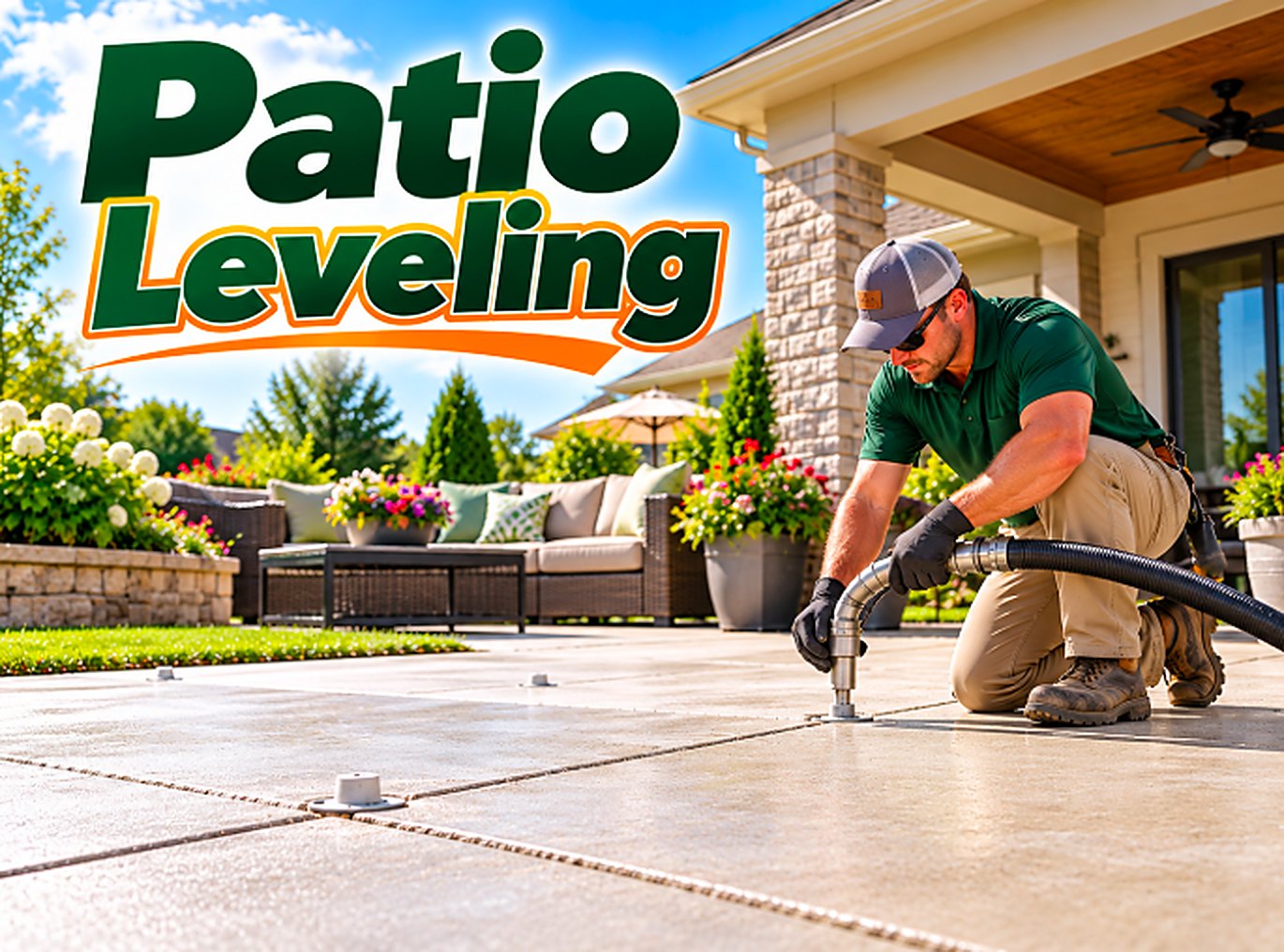
Patio Leveling Around Outdoor Features
Modern patios often contain more than open concrete.
The area may include:
- Pergolas
- Outdoor kitchens
- Fire pits
- Built-in seating
- Planters
- Drainage channels
- Steps
- Walkways
These fixed features can affect how much the concrete can safely be moved.
A proper evaluation considers the relationship between the slab and everything attached to or surrounding it.
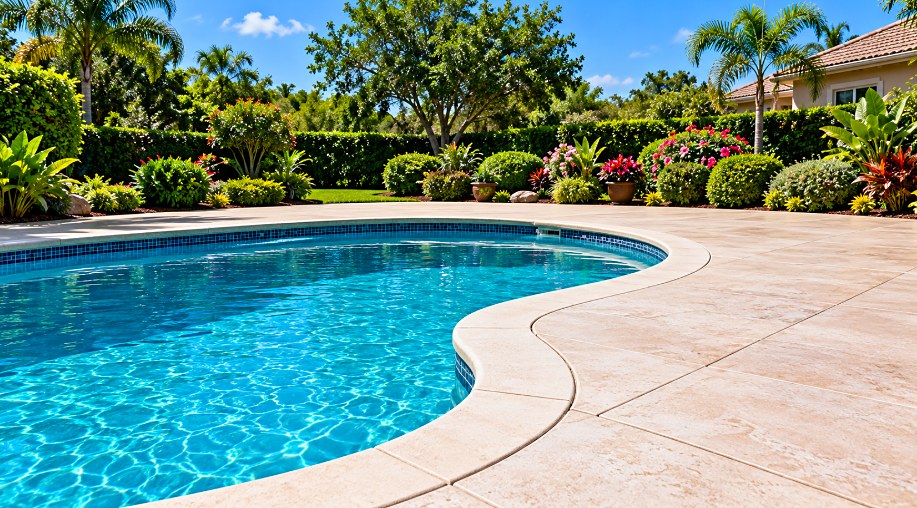
Poolside Patio Areas
Patios that connect with swimming pool areas require extra attention.
Concrete elevation may affect deck drains, coping, gates, and adjoining walkways.
The lift should maintain practical transitions throughout the area rather than focusing only on making one slab appear level.
Patio Leveling and Water Pooling
Depressions in patio concrete frequently collect water after washing, irrigation, or rainfall.
Lifting the settled area may help improve drainage when the problem is caused by slab movement.
However, some patios were originally poured with insufficient slope. In that situation, leveling may improve conditions but cannot always redesign the entire drainage system without replacing or modifying concrete.
Preserve the Existing Patio
Concrete replacement can affect landscaping, fences, outdoor furniture, and access to the backyard.
When the existing slabs remain structurally usable, leveling provides an alternative that focuses on the underlying support problem.
Our patio leveling service is intended to restore a more usable outdoor space while preserving good concrete whenever conditions permit.
Our Patio Leveling Process
Every project follows the same careful steps, from the first inspection to the final cleanup.
- 1
Inspection
We check every corner of each slab, the slope, and where water travels around the patio.
- 2
Map fixed features
Doorsills, walls, pergolas and pool decks are noted so the lift respects them.
- 3
Plan the lift
We set target heights that improve drainage away from the house.
- 4
Lift and level
Leveling material is injected through small holes to raise the low sections.
- 5
Finish and clean
Holes are patched and the patio is cleaned so you can put the furniture back.
Patio Leveling Cost in Pomona
Leveling usually costs far less than tearing out and replacing concrete. Here is what a typical patio project costs and what changes the price.
Patio size and slab count
Larger patios with more control joints usually need more lift points.
Fixed features
Pergolas, outdoor kitchens, fire pits and steps limit how far slabs can move and add planning time.
Slope toward the house
Correcting a slab that drains toward the home needs careful elevation work.
Access to the backyard
Narrow side yards or gates can affect setup time.
Prices are estimates only and are not a quote. Your exact price is confirmed in writing after a free on-site inspection.
Patio Leveling FAQs
Often, yes. When a patio slab has dropped near the home, lifting it can improve the slope so rainwater moves away from doors and the foundation. Because the patio connects to fixed heights like doorsills and walls, we plan the amount of lift carefully.
Yes, please clear furniture, grills and planters from the slabs being lifted so we can access every corner. Fixed items like built-in seating, outdoor kitchens and pergolas stay in place, and we plan the work around them.
If the pooling is caused by a sunken slab, lifting it often helps. Some patios were poured with too little slope from the start, and leveling cannot always fully correct that without modifying the concrete. We explain what to expect during the inspection.
In most cases leveling costs less than tearing out and repouring a patio. It also avoids damage to landscaping, fences and backyard access. If your slabs are badly broken, replacement may be the better choice, and we will tell you honestly.
Patios are often built over soil that was disturbed when the house was built. If that backfill was not well compacted, it can keep settling for years. Downspouts, roof runoff, irrigation and poor grading can also wash soil out from under the slab.

Ready to fix your patio?
Get a free, no-obligation estimate from a local Pomona team.