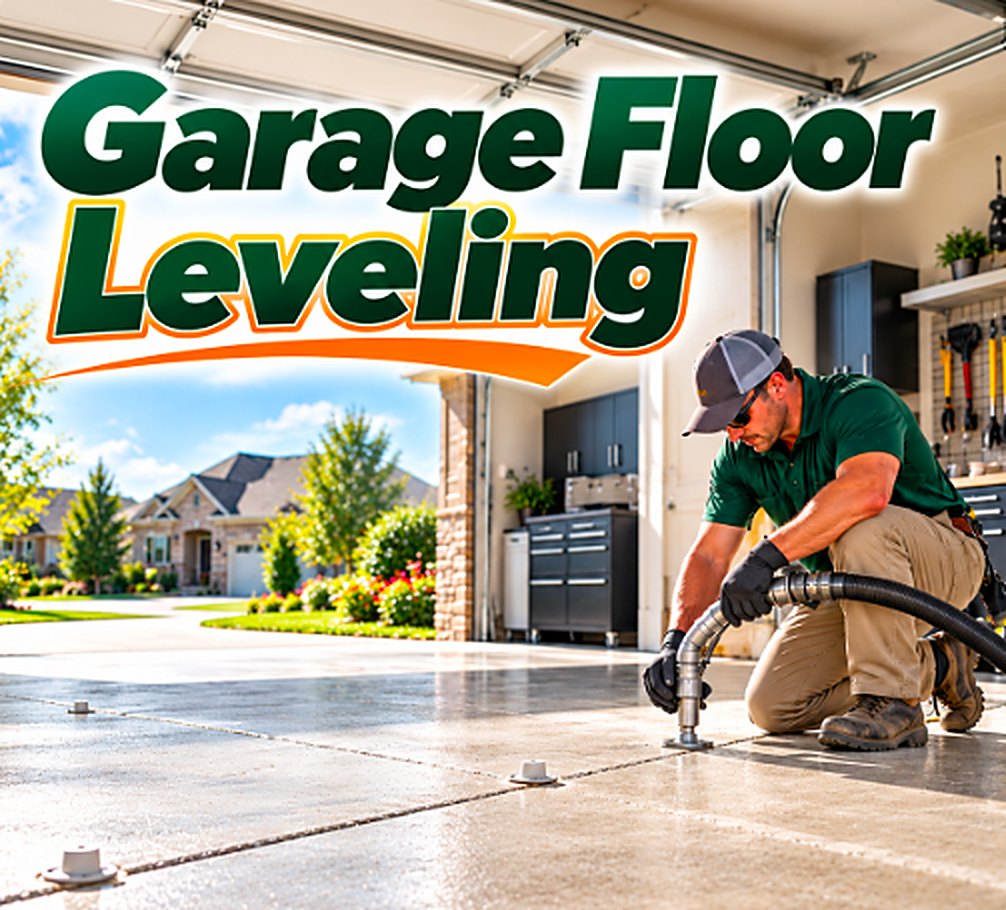
Garage Floor Leveling for Settled and Uneven Concrete
Garage floors experience conditions that are different from exterior patios and sidewalks. They support vehicles, storage systems, workbenches, appliances, and daily traffic while remaining connected to walls, garage doors, driveways, and sometimes interior living spaces.
When a garage floor settles, the result can include low spots, uneven sections, poor door transitions, standing water, or cracks associated with loss of support beneath the slab.
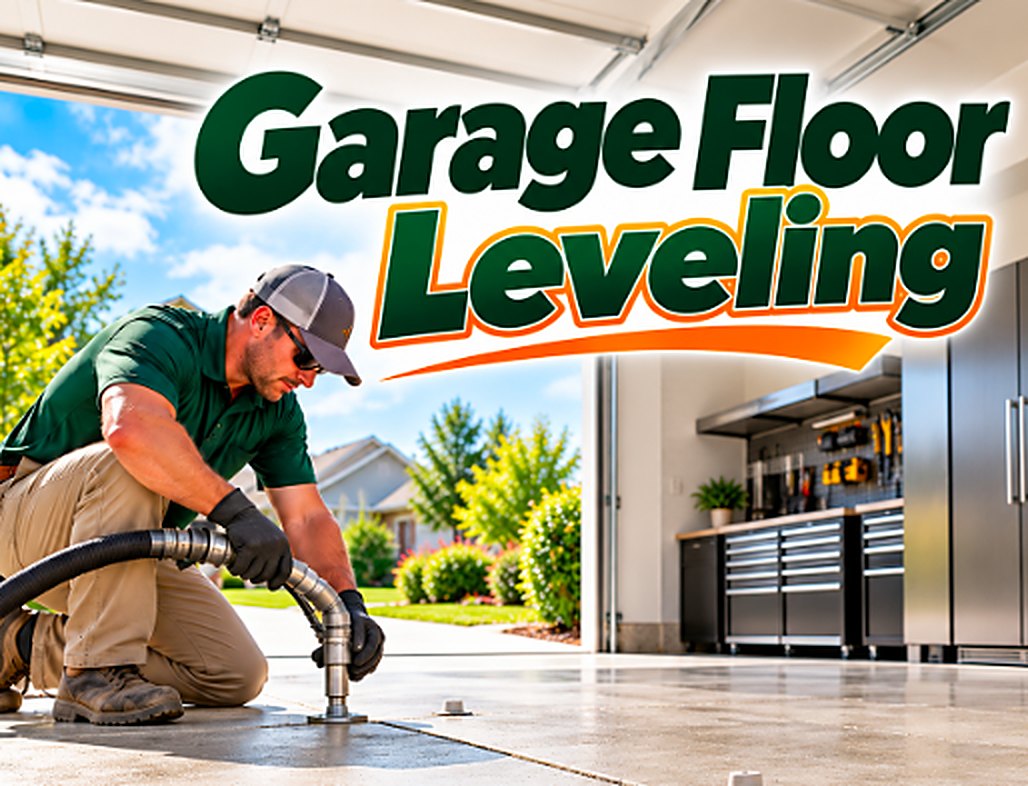
Garage floor leveling addresses concrete movement by evaluating whether settled sections can be raised and stabilized.
Signs of Garage Floor Settlement
Possible indicators include:
- A low corner near the garage door
- Gaps beneath walls or trim
- Water collecting inside the garage
- Uneven transitions between slabs
- A noticeable slope that has worsened
- Cracks accompanied by vertical movement
- Hollow areas beneath the floor
- Separation from adjoining concrete
Not every garage floor is intended to be perfectly level. Many garages are intentionally sloped toward the door for drainage.
The objective of leveling is therefore to correct unwanted settlement while maintaining appropriate drainage.
Why Garage Floors Settle
Garage slabs depend on the soil and aggregate beneath them.
Problems may develop due to:
- Poor compaction before construction
- Settlement of fill soil
- Water entering beneath the garage
- Leaking plumbing
- Downspout discharge near exterior walls
- Underground erosion
- Soil shrinkage
- Old utility trenches
- Voids below the slab
Because garage floors are enclosed, problems underneath them may remain hidden for a long time.
Leveling Near the Garage Door
Settlement at the front edge of a garage can create a poor transition with the driveway.
The floor may sit lower on one side, contributing to water entry or an uneven vehicle path.
The relationship between the garage floor, driveway, door seal, and drainage direction should all be considered before lifting.
Low Spots and Standing Water
Water that repeatedly remains on a garage floor may indicate a change in elevation.
However, not every puddle can be solved through slab lifting.
Sometimes the floor was originally finished with localized depressions or insufficient slope.
We evaluate the shape of the slab and surrounding elevations to determine whether settlement is contributing to the problem.
Cracked Garage Floors
Cracks are common in concrete and do not automatically mean the floor requires replacement.
The important issue is whether the cracked sections remain connected and stable enough to lift.
A slab with a single crack may still be a candidate for leveling.
Concrete broken into many loose pieces generally requires a different repair strategy.
Garage Floor Leveling and Heavy Loads
Garages may contain:
- Cars and trucks
- Tool cabinets
- Storage racks
- Refrigerators
- Workbenches
- Motorcycles
- Recreational equipment
These loads make stable slab support important.
Restoring support beneath a settled area can improve the overall usability of the floor.
Attached Garage Considerations
Attached garages may border interior foundations, utility lines, structural columns, stairs, or mechanical equipment.
For this reason, garage floor leveling should be approached carefully.
We assess the areas that can move independently and identify any fixed components that may limit lifting.
Leveling Versus Resurfacing
These two services solve different problems.
Resurfacing changes the top surface of the concrete.
Leveling changes the position of the slab itself.
Applying a coating or overlay to a settled garage floor may improve appearance but will not correct a major elevation difference caused by movement underneath.
Restore the Function of Your Garage Floor
A garage floor does not need to look dramatically damaged to have a settlement problem.
Small elevation changes can affect drainage, vehicle transitions, doors, and storage areas.
Our garage floor leveling service evaluates the existing concrete and determines whether settled sections can be repositioned while preserving the original slab.