Sidewalk Leveling in Pomona, CA
Remove trip points and raise sunken walkway slabs for homes, apartments and commercial properties in Pomona.
- Serving Pomona since 2012
- Bonded and insured
- Free on-site estimates
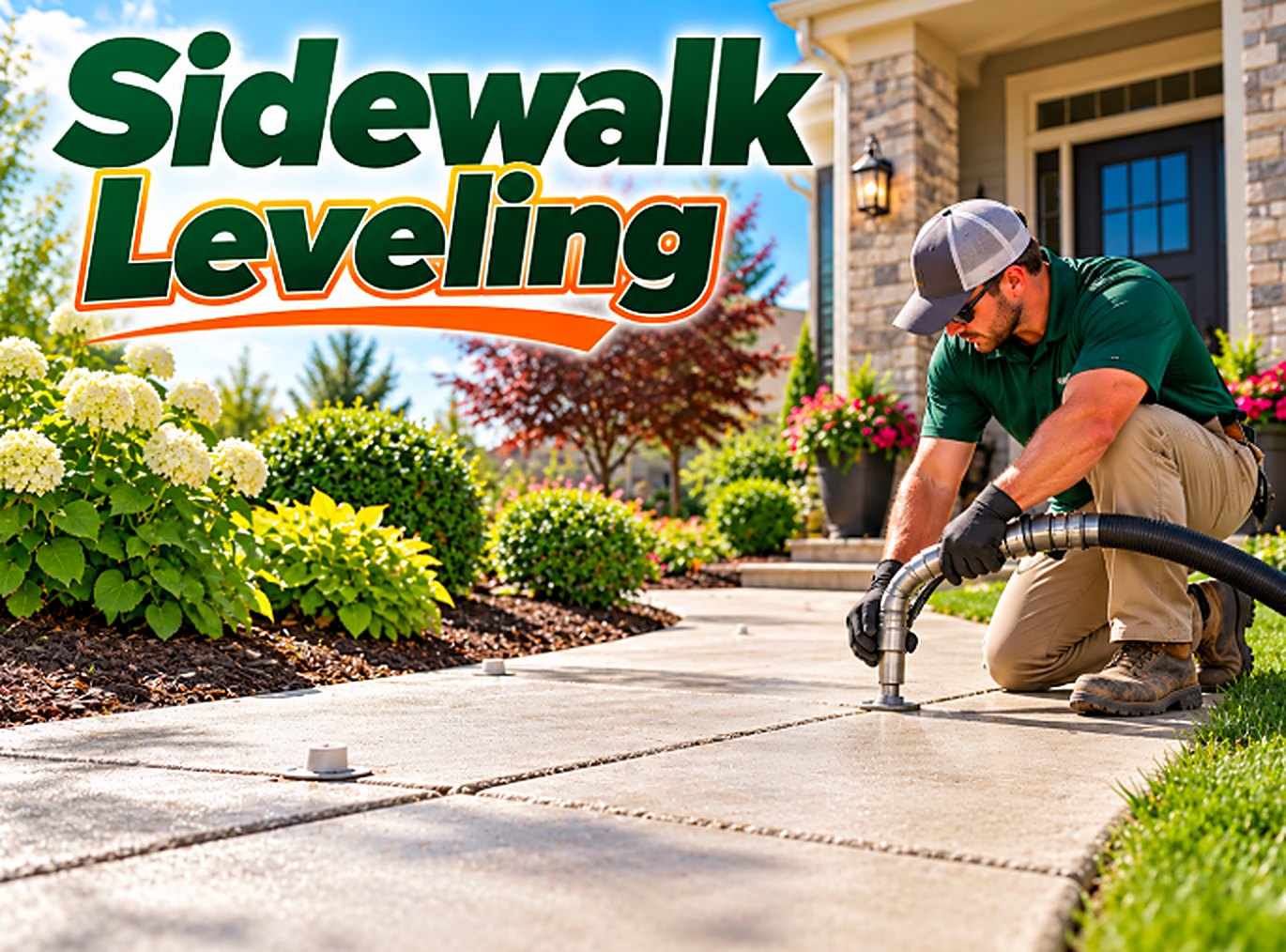
Sidewalk Leveling for Safer, Smoother Walking Surfaces
Sidewalk slabs are exposed to weather, soil movement, roots, irrigation, drainage, and constant foot traffic. Over time, individual sections can sink or shift, creating uneven joints that interrupt what should be a smooth walking path.
Sidewalk leveling corrects settled concrete by raising low slabs rather than automatically replacing every uneven section.
The service can be used for sidewalks around homes, apartment properties, commercial buildings, offices, courtyards, community areas, and other pedestrian spaces.
What Causes Sidewalk Slabs to Become Uneven?
Concrete sidewalks are usually installed as a series of separate sections. Because each section can move independently, one slab may settle while the next stays in place.
Settlement may develop because of:
The result is often a vertical edge between two neighboring sections.
- Soil erosion
- Insufficient base compaction
- Water runoff
- Irrigation overspray
- Plumbing or drainage leaks
- Soil shrinkage
- Previous excavation
- Root activity
- Voids beneath the slab
- Long-term ground movement
Correcting Sidewalk Trip Points
Even relatively small elevation differences can be noticeable on a walking surface.
Pedestrians may catch a shoe, stroller wheel, cart, or mobility device on the raised edge. Uneven sidewalks can also make a property look poorly maintained.
Concrete leveling raises the lower slab so the joint more closely matches the neighboring section.
Unlike surface grinding, which removes concrete from the higher edge, leveling addresses the position of the lower slab itself.
Residential Sidewalk Leveling
Walkways surrounding a home connect driveways, porches, gates, patios, side yards, and entrances.
A settled section near the front entry can be particularly noticeable because visitors use the area frequently.
We evaluate:
The objective is to create a better transition while preserving as much existing concrete as practical.
- Joint height differences
- Adjacent landscaping
- Drainage patterns
- Slab condition
- Root locations
- Steps and porch elevations
- Nearby driveways
Commercial and Multi-Family Sidewalk Leveling
Commercial properties often contain extensive pedestrian areas.
Uneven concrete may occur near:
Leveling selected sections can improve the walking surface without requiring widespread demolition.
- Storefronts
- Parking areas
- Apartment walkways
- Office entrances
- Loading areas
- Mail stations
- Common spaces
- Public-facing entrances
Sidewalk Drainage Problems
A slab that settles toward the center can create a low point that holds rainwater.
Another slab may tilt toward a building or landscaped area rather than away from it.
Where slab geometry permits, leveling can help restore a more appropriate position.
However, concrete movement may return if uncontrolled water continues removing or softening the underlying soil. Correcting drainage should therefore be considered part of the long-term solution.
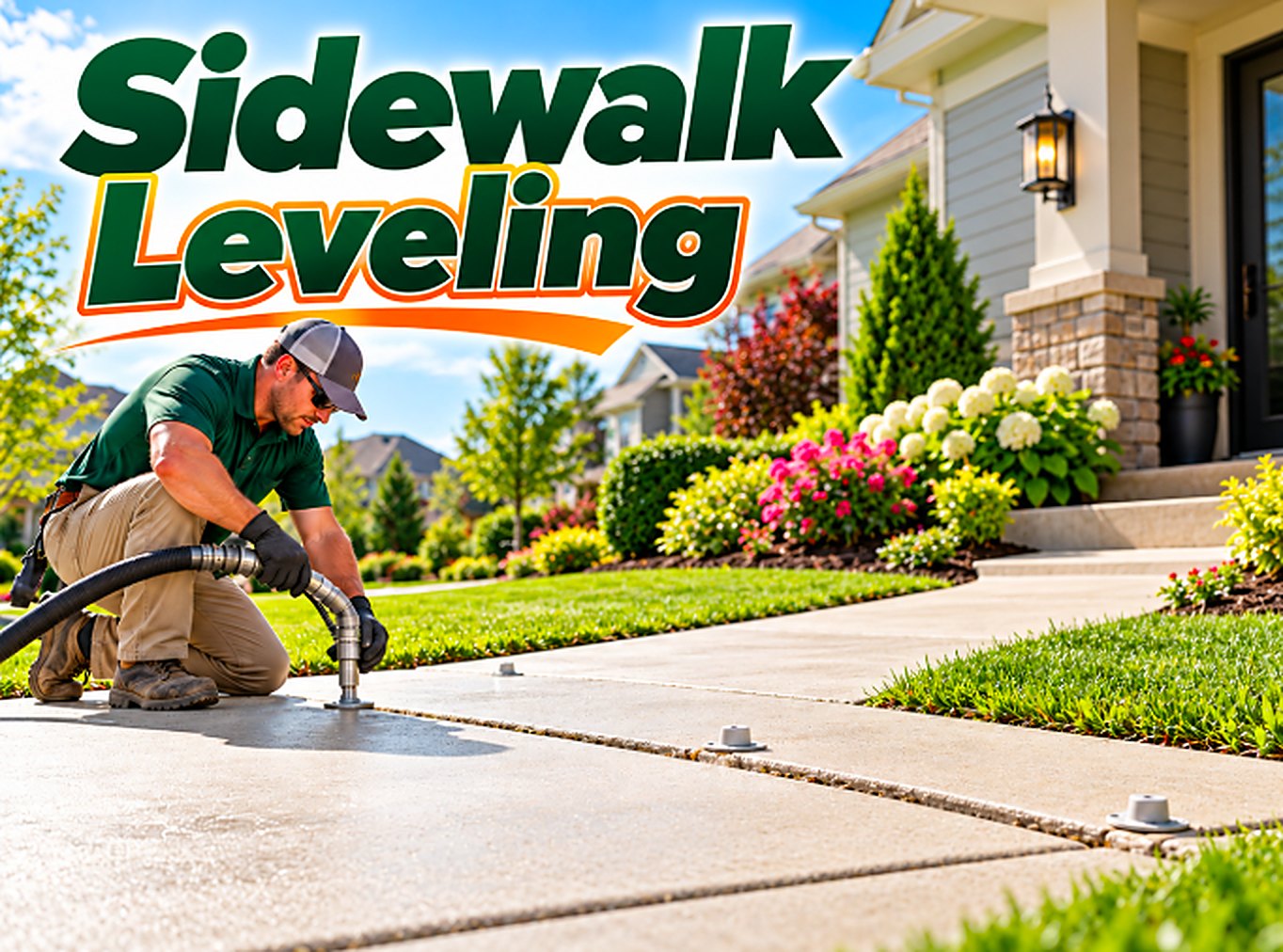
Sidewalk Leveling Around Tree Roots
Trees and sidewalks frequently occupy the same narrow spaces.
Roots may affect concrete in different ways. Some roots physically lift slabs, while changing soil moisture around a tree can contribute to settlement in nearby sections.
Not every root-related problem can be corrected through leveling.
Before proceeding, the direction of movement should be evaluated. A slab pushed upward by a large root requires a different solution from a neighboring slab that has simply sunk.
Can Cracked Sidewalk Concrete Be Leveled?
Some cracked slabs can still be leveled if they remain stable enough to lift.
A small crack does not automatically mean replacement is necessary.
However, concrete that has broken into several loose pieces may not respond well to lifting because each section can move independently.
The condition of the slab should therefore be considered before choosing the repair method.
Leveling Instead of Replacing the Whole Walkway
If most of a sidewalk remains in usable condition, replacing the entire walkway because of several low slabs may be unnecessary.
Concrete leveling targets the areas that have moved.
This approach preserves existing material and can minimize disturbance to landscaping, entrances, irrigation, and surrounding property features.
Restore a More Comfortable Walking Surface
Sidewalk settlement usually becomes more noticeable over time.
Correcting low slabs early can help prevent larger transitions from developing.
Our sidewalk leveling service evaluates the condition of each affected section and determines whether lifting can provide a practical solution for the existing walkway.
Our Sidewalk Leveling Process
Every project follows the same careful steps, from the first inspection to the final cleanup.
- 1
Inspect every joint
We measure the height difference at each uneven joint along the walkway.
- 2
Check direction of movement
We confirm whether a slab has sunk or been pushed up by roots, since each needs a different fix.
- 3
Mark the slabs to lift
Only the low sections are marked, so good concrete is left alone.
- 4
Inject and raise
Small holes are drilled and leveling material lifts the low slab to meet its neighbor.
- 5
Patch, check and clean
We patch the holes, recheck each joint, and clean the walkway.
Sidewalk Leveling Cost in Pomona
Leveling usually costs far less than tearing out and replacing concrete. Here is what a typical sidewalk project costs and what changes the price.
| Cost factor | How it affects your price |
|---|---|
| Number of uneven joints | Most sidewalk jobs are priced by how many slabs need to be lifted. |
| Height of the trip point | A larger drop between slabs takes more material to correct. |
| Tree roots nearby | Root-related movement needs extra evaluation and may change the repair method. |
| Residential or commercial | Larger commercial walkways may include more sections and work around foot traffic. |
Leveling
- Keeps your existing concrete
- No demolition or haul-away
- Usually back in use much sooner
Replacement
- Old concrete is removed
- New concrete must be poured and cured
- More disruption to landscaping
Prices are estimates only and are not a quote. Your exact price is confirmed in writing after a free on-site inspection.
Sidewalk Leveling FAQs
They solve different problems. Grinding shaves down the high edge, which leaves the low slab where it is. Leveling raises the sunken slab itself, so the joint lines up and the slab is supported again. For slabs that have clearly settled, leveling usually gives a better result.
It depends on how the slab moved. If roots pushed a slab upward, lifting the neighbor is not always the right answer, and a different repair may be needed. If nearby slabs simply sank because soil moisture changed, leveling may work well. We check the direction of movement first.
Yes. We level walkways at homes, apartment communities, offices, storefronts, courtyards and other pedestrian areas around Pomona. For commercial sites we plan the work in sections to keep walkways usable for tenants and customers.
A small crack does not automatically mean replacement. If the slab is still stable and holds together, it can often be lifted. Slabs broken into several loose pieces usually do not respond well to lifting, and we will recommend the best option for those sections.
Common causes include soil erosion, poor base compaction, runoff, irrigation overspray, plumbing leaks and voids under the concrete. Because each sidewalk section moves on its own, one slab can drop while the next stays in place, creating a trip point.
Ready to fix your sidewalk?
Get a free, no-obligation estimate from a local Pomona team.